
About the project
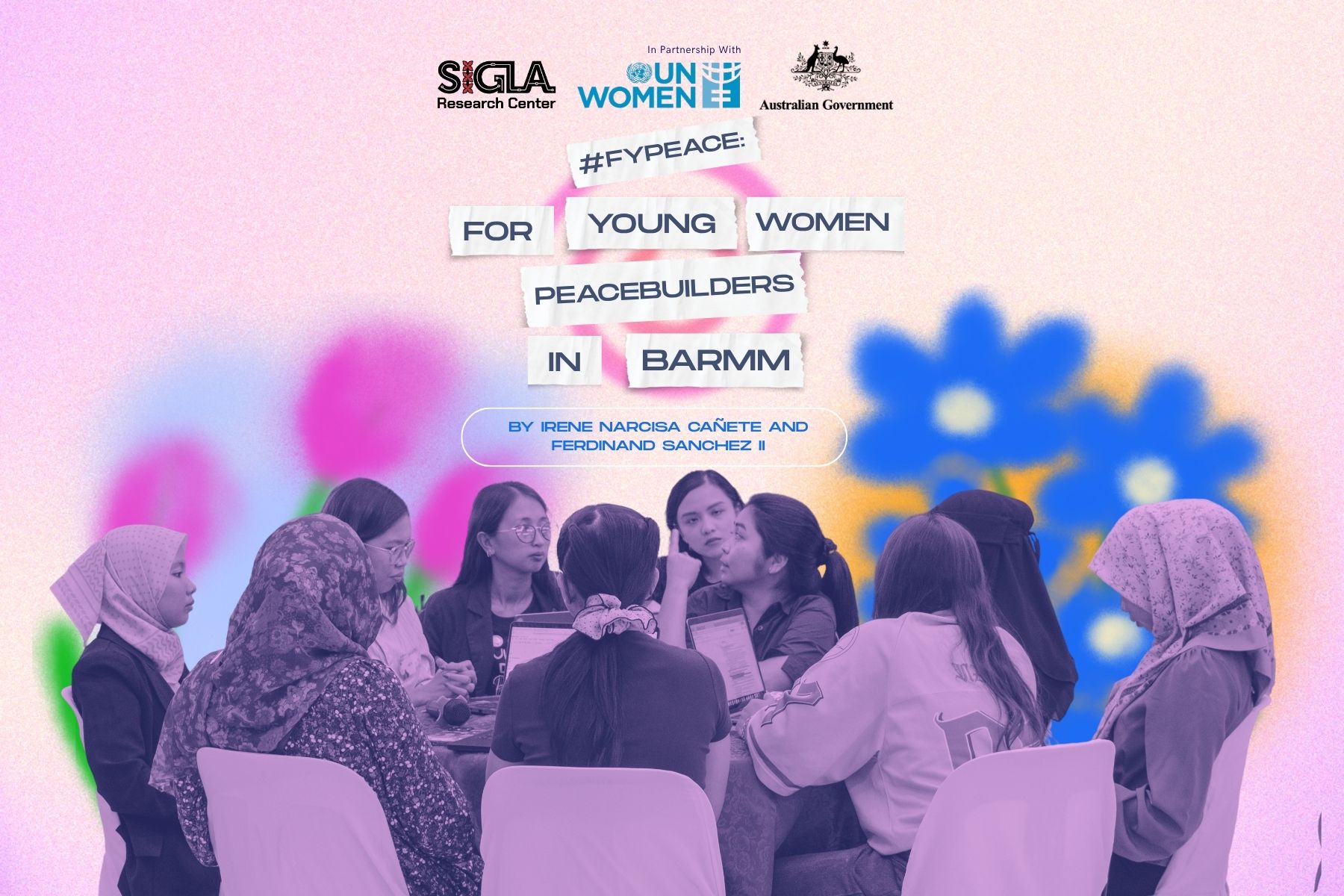
The #FYP: For Young Women Peacebuilders is a 6-month digital peacebuilding program implemented by Sigla Research Center in partnership with UN Women Philippines. The initiative engaged a cohort of 24 Digital Peacebuilding Fellows through a series of online small dialogues, public lectures, masterclasses and a culminating workshop.
The project is rooted in the premise that Bangsamoro women are inherently active peacebuilders, civic actors and navigators of complex digital environments. Its aim is to systematize these practices alongside deliberation so that different communities of practice can learn from each other to manage conflict, create space for peacebuilding and address pressing issues.
The central question
At the heart of the conversations were the following questions that anchored the fellows' deliberation: What if digital spaces were designed as an enabling space for peacebuilding in BARMM? What would that look like, and what would it take to get there?
Everything the fellows discussed across the workshop's three sessions built toward answering this question, from taking stock of where things stand today, to envisioning what an enabling digital space could look like, to identifying the concrete steps needed to build it.
Our approach
The workshop was structured around three deliberative sessions, each pairing breakout-group discussion with plenary sharing and reflection.
The fellows collectively assessed the current state of digital peacebuilding in BARMM, drawing on insights and priorities surfaced from the earlier dialogues and co-creation workshop. Then, they moved into envisioning. Using scenario-building and metaphors, they articulated a shared vision of what digital spaces designed as enabling environments for peacebuilding could look like. Finally, the fellows turned toward action by identifying the concrete steps, stakeholders, programs, and policies needed to build these spaces, then synthesizing and ranking their priorities as a group.
The resulting recommendations were then presented to public officials and civil society organization partners who offered their responses and reflections.
Key recommendations
Grounded in their deliberations, the fellows identified four key recommendations:
Digital Peacebuilding Conversation Series
You can learn more about digital peacebuilding and deliberative practices through our online playlist: